Showing posts with label professional development. Show all posts

Wednesday, June 22, 2016

#IDedchat: Summer reading June 22, 2016


This week, I'll be hosting #IDedchat along with Sarah Windisch. It's summer, and that means we finally have time to sit down and read. I know my summer reading is always a mix of professional books, KidLit, pulp novels, and internet articles. Even though my to-read list is endless, I'm still always looking for recommendations.

Tonight, let's give each other some recommendations for summer reading. We will try to just have an open discussion and just throw out ideas from our own diverse reading lists. Think about the questions below to guide our discussion, and Sarah and I will throw them out throughout the chat if we need to keep the discussion moving.

I hope you'll join us tonight, and I really look forward to hearing your recommendations!

Summer Reading
June 22, 2016
7 p.m. PDT / 8 p.m. PDT / 9 p.m. CDT / 10 p.m. EDT

Some of these questions come from a chat that I hosted for the gone, but not forgotten, #slowchated

What are you currently reading?
Which book do you most recommend for other teachers?
What is your all-time favorite book?
 Share something you read as a student that sticks with you to this day.
Why did it make an impact?
Share something you read that inspired a change in your practice this school year.
 Share something you have read and are still digesting.
 What do you most want your students to read?


Sunday, April 17, 2016

Edcamp Cd'A is coming.


Things have been really crazy for me for the last couple months. When I presented at the Coeur d'Alene Education Partnership's State of the District event, I said that I wanted to bring the Edcamp experience to our region within the next year. Before I knew it, Edcamp Cd'A was coming together. It will be the first Edcamp in North Idaho, and I can't wait to see how it goes. I'm working with a terrific team to put it all together, there is just a lot to do before it gets here. If you're in the area, I hope you can join us.

Edcamp Cd'A
May 14, 2016
9:00 a.m. - 3:00 p.m.
Lake City High School


Sunday, February 14, 2016

Inspiration from #IETA16

My head is still swimming from all the education awesomeness I experienced at my first Idaho Education Technology Association (IETA) Conference. Between the sessions, exhibit hall, and networking, it was one of the best conferences I've attended. Rather than leaving with a mile-long wishlist of technology, I have ideas that I can use in my classroom and share with my colleagues.

I was lucky enough to attend along with my wonderful wife, Sarah Windisch. Since we're both always looking for ways to improve our schools and classrooms, the learning never stopped. We're still talking about all of the things we're inspired to try out.

Monday opened with Darren Hudgins' keynote presentation "The Merchant of Someday." He highlighted just how rapidly access to information and communication is changing the world.
Although the world has changed immensely in the last few years, schools have been much slower to adapt. He challenged us to use our vision of someday to guide us as we sell learning to our students. It definitely set the right tone to kick off a technology conference.
I also got to learn about Hyperdocs from Lisa Highfill on Monday. The basic idea of Hyperdocs is to create an all-in-one digital document that gives students the instructions and resources to explore and learn on their own. Then students can share the basic information with each other online leaving your class discussion time for making meaningful connections and digging deeper. This was my biggest takeaway from the conference. I'm putting this right to work in my classroom for third grade literature circles. I also loved hearing about Lisa's Teachers Give Teachers Twitter account. It's basically a repository for re-tweeted free resources from other teachers. It's a great concept, and I hope it really takes off in Idaho.

The #IDedchat crew got together Monday night. Discovery Education hosted a nice reception for the group and it was fun to spend some time with my usually virtual PLN.
My favorite Tuesday session was almost another keynote as Rushton Hurley talked about making memorable projects. He encouraged us to get students asking interesting questions.
When students are interested, they're willing to produce excellent work. In addition, constructing a memorable project sets the stage for greater student learning.
The rest of the second day was full of great ideas, too, but the highlight was the IETA Teacher of the Year award. It went to a fourth grade teacher from my district who has done some amazing things with technology in her classroom. I always look forward to learning with her at our district technology meetings. Congratulations, Kelli Ogle!

There were so many things at IETA that I want to bring back to my classroom. It will definitely keep me trying new ideas through the rest of this school year and beyond. And I'll keep you updated as I continue to experiment and refine...

For more #IETA16 learning, check out Janet Avery's Storify of Day 1 and Day 2.

Saturday, September 5, 2015

Getting ready

Another school year starts on Tuesday. Am I ready? I sure hope so. No matter what next week brings, I had a terrific week of getting ready for the new school year.

On Monday, my principal gathered our entire school staff for team building and goal setting at the North Idaho College Challenge Course. We've always had a tight staff, but it was amazing to see the trust exhibited on that ropes course. About half of us were willing to go up and try the high wires, rickety bridges, and swinging balance beams, but everyone took part hoisting ropes and working together on the ground-based challenges. It was the best start to teacher meetings I've ever experienced.

Tom Schimmer came to speak to all of our district's teachers about grading on Tuesday. He presented the idea of a standards-based mindset for grading. I really got a lot from his presentation, but the best were his explanations of summative vs. formative assessment that helped me understand the difference better than ever. We also received copies of How to Grade for Learning by Ken B. O'Conner for a district-wide book study. I'm excited to delve into this topic.


Speaking of book studies, my school staff read Dave Burgess's Teach Like a Pirate this summer. I read it the year before, but I was happy to share the experience with my staff. We had a pirate party to celebrate and discuss some of the ideas that came from reading it. Many of the teachers commented that the high school orientation of the book was difficult, but everyone came away with ideas for the coming school year. For me, the best part of our discussions was hearing about the plans to bring more joy into the classroom. The emphasis on testing and rigor has taken a toll on our kids and I'm glad to see our school focus on incorporating more fun and excitement into the good work we're already doing. I put up a Teach Like a Pirate bulletin board in our staff room with space for teachers to add notes about the ways the book affects their classrooms. I look forward to seeing what shows up there.

In addition to getting ready for the new school year as a teacher, I am the parent of a kindergartener this year. Thursday was kindergarten orientation for parents and our school's open house. Orientation was a remarkable event. My school's kindergarten team, Title I teacher, and district math coaches gave parents games and strategies to help their little guys succeed. We left the event with great information on assisting our son with handwriting, reading, and number sense. The evening's open house was a blast, too. It totally changed my perspective to experience this event as a parent. My son is lucky to have some friends from preschool in his class, because I think that helped put him at ease. He also got to meet his teacher, find his locker, and play on the playground. He seems really excited to start school next week: I'm the one who's nervous about it.

Finally, I was able to end the week with one of my favorite things: seeing and hearing live music. Sarah and I went to see Junior Brown in Spokane at Pig Out in the Park. I've loved Junior Brown's music since I was in high school. I saw him perform last time he visited the area nearly 20 years ago, when the world looked like this music video.

If it's possible, he was even better at playing the guit-steel this time around. The sounds he creates with his instrument are absolutely jaw-dropping. When we discussed it on the way home, we figured that he's had 20 more years of practice. I want to continue improving my practice as a teacher the way he has improved as a musician - maintaining my enthusiasm, experimenting with new techniques, and refining my craft. Here's to another year of practice!


Here's some more recent concert footage if you want to see what I mean about what happens with 20 years more practice!

Sunday, May 3, 2015

The swinging new sounds of professional development

Since becoming my official Building Technology Leader, I've been working to provide meaningful professional development to my colleagues. I often share a new tool or idea with my staff at our collaboration sessions or staff meetings. I have made it a priority to give teachers time to discuss, experiment, and play with new technology in my sessions, but everyone seems a little reserved and hesitant and I can tell that many are much more concerned with the impending morning bell and preparing for the day to come. I knew I could make professional development more engaging and memorable. Press 'play' below, read on, and see what I mean.


Welcome to Monday Morning Appy Hour!

Care for a drink? It's okay, these mimosas are made with 7-Up, not champagne. Fire up that iPad and learn about a few new apps.

Stemware & iPads: what a combination!
The content of Monday Morning Appy Hour wasn't radically different from my other PD sessions. I shared SeeSaw, ChatterPix, Shadow Puppet EDU, and Telestory, discussed the importance of moving students from consumers to creators, and gave everyone some time to try the apps and generate ideas on how they could be used in the classroom. The attitude and level of participation, though, was a huge improvement from my past morning trainings. Everyone was having fun, and they were really discussing how they could use these tools in their classrooms.

So, is providing refreshments the key to engaging PD? I don't think so. I transformed my classroom and broke everyone there out of the expected environment. I've done it before for my students by disguising myself as a signer of the Constitution and being my own substitute teacher for the day or starting class with kindergarten-style circle time for fifth graders, but I'd never transformed a presentation intended for other teachers.

PD featuring the smooth instructional stylings of
Jim Windisch
In Teach Like a Pirate, author Dave Burgess devotes an entire chapter to transformation. In the chapter, he asks a powerful question: "If your students didn't have to be there, would you be teaching in an empty room?" Teachers are busy; they have a lot to do to be ready for the day each morning. As much as they want to learn new technology, I know my PD sessions wouldn't be everyone's first choice for that precious before-school time. This session was optional, but most of my school's staff was there. In fact, after the first couple teachers came in, received their drink and heard the lounge music, they went and grabbed others because "Mrs. X just needs to see this!" It went from a training to an event.

Making it fun loosened everyone up. They were excited to participate. The room was full of terrific conversations about giving students opportunities to create. I jumped in to support and tell some lousy jokes, but I refrained from actually doing any lounge singing. 

It was also a memorable experience. I feel like breaking away from the ordinary got the morning's content stuck in the participants' heads. Instead of having teachers ask me to remind them the names of the apps, they're coming to me to share how they've incorporated them into lessons and looking for support to take it a step further.

I'm sure this is only my first foray into transforming professional development. I'm already thinking of themes for future sessions. And I'll keep you updated at I continue to experiment and refine. 

Thank you, thank you, and especially, thank you. Remember to tip generously. I'll be here all week!

Saturday, April 4, 2015

Inspiration from #NCCE2015

Image from blog.ncce.org
I've been home from the NCCE-Northwest Council for Computer Education conference for two weeks, and my head is still spinning with all of the educational awesomeness I encountered there. It was my first time at a big education conference, and I did my best to take it all in. I attended 14 sessions and workshops and kept up with countless more via Twitter. I walked every aisle of the exhibit hall, and spent all of my free time connecting with inspiring educators from around the country.

New Tech Ideas
Collaboration is the big idea in education right now. I learned strategies for managing collaborative work in Google Drive including having students experiment with collaborative documents by starting with a spreadsheet with their own assigned rows (thanks Nikki Robertson). Cheryl Steighner hosted a terrific session about Google in elementary schools. One of her ideas is to have a collaborative story that students can add to over time. She has one story that students have continued even two years after leaving her classroom! Throughout my time in Portland, I heard about countless apps, websites, and tools that I will be exploring for months to come.

Connections
As great as the official sessions and workshops were, the best part of attending NCCE was connecting with other educators. There were quite a few sessions about how important it is to build a personal learning network (PLN) through Twitter or another social learning platform. I am a full-fledged Twitter evangelist, and my time at NCCE proved why. Everywhere I went, I ran into people I already knew. We were able to jump in and discuss because we already knew each other's backgrounds. I added many more educators to my PLN so I could continue to learn from them after NCCE.

Excuse the random
photo, but the mens'
rooms in the Portland
Convention Center have
amazing artwork!
One highlight of connecting at NCCE was Wednesday's #IDedchat. We met at a swanky, 30th story bar in downtown Portland to discuss professional development. It was a little strange staring at our phones to chat online when we were in such a beautiful place with great company, but being together created a more festive atmosphere for the chat. Plus, most of us arrived early to share dinner and chat.

I also got to have a wonderful lunch with Cheryl Steighner to discuss tubas and elementary education, and I spent a night on the town with some of my colleagues from Coeur d'Alene (Kelli Ogle and Kiersten Kerr are the only ones on Twitter) and Nikki Robertson from Alabama. I also got to chat with one of the most inspiring bloggers I know, Steve Wyborney, in the exhibit hall. Those informal learning moments were the best of the conference!

Now it's time to put what I've learned in to action. On Monday, I'm hosting a Monday Morning Appy Hour at my school to share some of the iPad apps I learned, and I'm working many of the other ideas I learned into upcoming lessons. It also sparked a desire to attend (and possibly present at) other big conferences. We'll just have to see where that leads, and I'll keep you updated as I continue to experiment and refine...

Sunday, March 15, 2015

Sunday Summary: Authentic Audience on #slowchated

You can relive the entire week's chat with the Storify archive!

From hanging work in the hallway to having my students publish their own book blog, giving kids an authentic audience has been a powerful force in my classroom this year. I was happy to jump in and moderate #slowchated this week to find some other perspectives on authentic audiences.

I started the week with this question:

I was surprised by the wide range of answers. This one matched my initial thoughts on the topic:
 But these ones made me realize that there might be more to choosing a truly authentic audience:

I've been successful at giving my students an audience they have no connection with. I often share our book blog on Twitter tagged with #comments4kids As a result, my kids have received feedback from teachers I know in other parts of the country along with others who have absolutely no connection to me or our school. When we've discussed it as a class, everyone agrees that they take more care with their writing when they are truly publishing it for the world. We don't know who will read it.

I really like the idea of using people with expertise as an authentic audience. When I invited judges for my school's Invent Idaho competition, I asked a friend who is an accomplished tinkerer to view the projects. With his experience in electronics projects and scale modeling, he was able to give students feedback on their projects that I wouldn't have considered. Our district technology coach also judged. He has judged at many of these competitions, so he was able to offer yet another perspective. Going forward, I want to find more opportunities for my students to present to "logical consumers."


There are so many appropriate audiences for students, the key is getting their work in front of someone. The background photo above is a poster some of my math students made after learning about scale drawings. It's been hanging in the hall facing our playground for months, giving my students an authentic audience for their work each time students go in and out the playground doors.

I hadn't directly thought about the benefits of audience awareness before. But, I have seen my students go from assuming everyone knew all about the characters in Harry Potter and other popular series to understanding that they needed to provide that information in their book reviews. I think building audience awareness leads to developing greater empathy. It's definitely an idea worth exploring further.

A few of our slow chatters shared some great things they've done with their students. These were two of my favorites. Please follow the links to see some great student work!


Although most of our discussion was about reaching out, this was a great reminder that our classrooms have a built-in audience. When work is shared with classmates rather than created for teacher eyes only, our students get many of the benefits of having an authentic audience. Doing it successfully, though, often requires teaching what it means to be a good audience, as described in the tweets below.


I've been able to incorporate an authentic audience in my English/Language Arts classes with our book blog, but I really want to give my math students more opportunities to put their work in front of others. Here were a couple other places suggested for authentic audiences.


During Day 4, Mark Crotty suggested that it was worth examining how the structure of school affects authentic audiences. I decided to use his question for our 5th day of discussion:


I love this idea - a school so engaging that the community wants to be a part of it. By opening our doors and sharing the great work of our students, it can become a reality.

Thanks so much to everyone who participated in this week's #slowchated discussion of authentic audience. I'm excited to use what I've learned from this week's chat in my classroom. And I'll keep you updated as I continue to experiment and refine...


Saturday, December 6, 2014

Making ideas real: #slowchatED December 8-12

Since joining Twitter, #SlowChatEd has been one of my favorite hashtags. Since it runs for an entire week, it was always a little different than the other, sometimes frantic Twitter edchats I join in on. But when the school year started, #SlowChatEd disappeared. I figured it went on a short hiatus while the usual moderators were "September busy." The hiatus dragged on, and #SlowChatEd slipped to the back of my mind.

Then, a couple weeks ago, Ross LeBrun revived #SlowChatEd to talk about being thankful. Although I couldn't participate for the entire week, I was reminded how much I liked the slow chat format. So, this coming week I plan to hijack (I mean moderate) #SlowChatEd to talk about "making ideas real."

As I've shared before, joining Twitter has done wonders for me as a teacher. Before Twitter, I was still an avid reader of big education websites like Edutopia and a few teacher blogs. I attended conferences and professional development classes whenever I got the chance and I was always looking for new ideas in my classroom. When I hear a great idea, I want to put it into action right away! Sometimes, though, I had so many great new ideas that I just couldn't make them work. Being on Twitter has only made it worse - my TweetDeck columns are never-ending waterfalls of new ideas. How can I make the best of these ideas into reality?

Image by nocturnal~schism
I'll be posting one question or prompt each day for the next week. Since it is a slow chat, please feel free to respond in multiple tweets, post links to resources, and ask questions of the other participants. Here are the questions:

Monday: Share an idea you recently implemented in your school.

Tuesday: What are your favorite sources for new ideas?

Wednesday: How do you manage the flow of ideas?

Thursday: Share an idea you are working on now. How are you moving from idea to reality?

Friday: How can we support each other and our colleagues to implement new ideas?

I have a few follow-up questions in mind for some of the days, too. I hope this will be a valuable discussion and I hope to see you there!

Monday, July 28, 2014

Inspiration from Edcamp Idaho

This has been a tough post to write, I really don't know how to describe my experience at the first Edcamp Idaho.  My son (almost 4 years old) helped me. He said I should write:

Camp was fun! Everything there was so much fun!

His words pretty much cover it, but I'll try to elaborate. When I first heard about it, I was afraid I wouldn't be able to go. Although it was my state Edcamp, it was a long way away. I took the plunge and made the 11 hour drive to be there.

Photo by Simon Miller
The night before the event, quite a few #IDedchat participants met for a Tweetup at a local restaurant. My main goal for the trip was to meet members of my personal learning network face to face and this would be my first opportunity. It was a little surreal meeting people I had never met before, yet they knew me by name before we even said hi. We were able to chat, share some food, and play bocce. If there is ever an inter-state edchat bocce competition, I wouldn't bet against the Idaho team (as long as I wasn't playing - my bocce game still needs some work).

Everyone was excited to be there to share ideas, and they were all unbelievably helpful and friendly. Being at the other end of the state, I only knew one other person there. Simon Miller is a technology coordinator from Kellogg, Idaho who I first met at a Google Apps for Education Festival this winter. He helped arrange accommodations for me in Hailey. I also met my host for the night, Dave Guymon. He just moved to Hailey to take a job with their school district and graciously offered a place for Simon and I to stay the night (and he cooked us a hearty breakfast before our day of learning). Tim Rocco was kind enough to supply us with sleeping bags for the night. In addition to the effort those three put into making sure I had somewhere to sleep, everyone else at dinner instantly made me feel at ease and comfortable. I met four more members of my PLN: Tami Rigby, Marita Diffenbaugh, Janet Avery, and Chad Avery. There were plenty of teachers who weren't on Twitter (yet) who joined in our conversations that night.

Edcamp Idaho session board photo by Janet Avery
Since I was staying with some of the organizers, I was one of the first to arrive at Wood River High School in the morning. I met Maggie Stump, who has been an active participant in our Teach Like a Pirate book study, right away. Excited educators kept streaming in and voting for the day's topics. One of the great things about edcamp is that all of the sessions are completely participant created and driven. For Edcamp Idaho, most of the session ideas were proposed ahead of time and participants were able to place stickers on the topics they wanted included in the day's agenda. When the session board was posted, there were 36 sessions to choose from with topics ranging from encouraging students to read non-fiction to learning how to use specific technology resources.

My first session was Teach Like a PIRATE. Although only a handful of teachers in the room read the book, we had a great discussion on the importance of rapport and a lot of ideas shared for transforming classrooms. I went to sessions on favorite classroom apps and using Discovery Education, but my favorite session of the day was "Things That Suck." That session presented us with controversial education topics and everyone in the room physically arranged themselves in order from strong agreement to strong disagreement and then we debated. I found that I was frequently in the middle, but there were many passionate arguments for and against merit pay, high-stakes testing, and homework. I was surprised by the diversity of opinions in the room.

Hanging out with other edcampers - photo by Marita Diffenbaugh
Edcamp Idaho was everything I hoped it would be and more. With over 100 teachers in attendance and 36 sessions, I'm still sorting out everything I learned. I have a huge list of apps to check out, some resources to investigate for project-based learning, and ideas for getting my students started with Google Apps. I even won a year subscription to Nearpod! But by far the most valuable part of Edcamp Idaho are the connections I made. As great as building my Twitter PLN has been, meeting face to face is amazing. I guess the best way to wrap it all up is by saying: Camp was fun! Everything there was so much fun!


Wednesday, July 2, 2014

P is for passion

Image from a presentation by Christy Hilbun
The #IDedchat study of Teach Like a PIRATE has begun. And the P in PIRATE stands for passion, an essential element for any good teacher. Author Dave Burgess asks readers to answer three questions about passion. I decided to post my answers here.

"Within your subject matter, what are you passionate about teaching?"
When I was teaching fifth grade, this would have been an easy answer: U.S. History! I love our country's early history: the crazy adventures of the first European explorers, the hardships of colonization, the passion that ignited the revolutionary war, and my all-time favorite topic: the three branches of government. Next fall, when I am officially an advanced learning teacher, those aren't technically within my subject matter. Instead, I'll be teaching reading and math switch groups for third, fourth, and fifth graders.
My passions in reading and math aren't as easy to define. I'm passionate about good storytelling and the ability to get lost in a great book. I'm passionate about learning through non-fiction. I'm passionate about connecting mathematics to real life. I want my students to fall in love with reading for pleasure and reading to learn. In math, I want them to see mathematics as a language for communication and problem solving. If I can weave those into every class, the passion will be there.

"Within your profession, but not specific to your subject matter, what are you passionate about?"
Lifelong learning is definitely a passion! When I was in school, I wasn't a good student, but I was a good learner. I would take an idea and run with it, puzzling though multiple solutions or seeking out books to learn more. My greatest goal as a teacher is to create lifelong learners. I want my students to have the tools to learn and discover about anything they want or need to know.

"Completely outside your profession, what are you passionate about?"
I love my family! I want to spend quality time with them and have fun. Music is a big part of my life. I play the tuba whenever I get a chance, but listening to music is one of my favorite activities. I grew up loving my grandpa's big band records. I still love the music of his era, but I've branched out to have very eclectic tastes: I'll listen to anything! Food is always on my mind. I enjoy cooking just as much as eating.  I studied the Titanic disaster in-depth throughout high school and college, and I still add to my library of books and articles about the ill-fated maiden voyage. And I can't get enough of surprising and obscure facts: I'm constantly reading articles from mental_floss and sharing all of the crazy things I learn with anyone who will listen.

Now that I've identified my passions, it's time to bring them into my classroom. I'm looking forward to learning how to do that in the rest of Teach Like a PIRATE. And I'll keep you updated as I continue to experiment and refine...


If you would like to join the #IDedchat study of Teach Like a PIRATE, let me know in the comment section or by contacting me on Twitter @teacherwithtuba We just got started, and would be happy to build a larger group!

Tuesday, June 24, 2014

Inspiration from The Book Whisperer

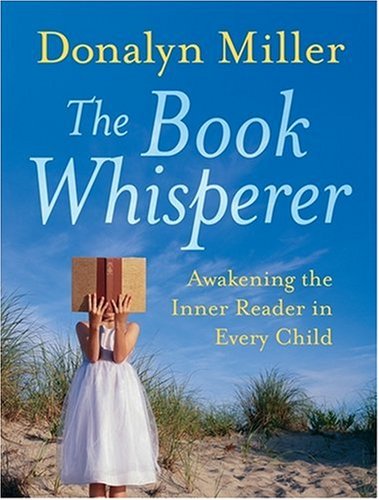
Image from Amazon.com
My first professional read of the summer was Donalyn Miller's The Book Whisperer. I came away from it questioning everything I've done as a reading teacher. And I'm happy to be doing that.

The big question I've started to ask is: "Do the things I do in class promote reading?" My reflection reveals a mixed record. I have always taught in Accelerated Reader schools and put quite a bit of effort into calculating, monitoring, and rewarding student reading goals. No matter how high or low I set the goals, I always had about 25% of my students who never reached a grading period goal. As I conferred with and observed these students, I found that they would start books, but rarely finish. They weren't motivated to read and earning AR points wasn't doing anything to help. The time I invested on managing reading would have been better spent promoting reading. As a teacher, I need to help connect kids to the books that will make them passionate about reading. I should start with book recommendations to the class and individuals. My classroom needs a "reading culture" where students talk about and trade books on a regular basis. Reading is intrinsically motivating, and students need the opportunity to learn that.

Another big idea from The Book Whisperer is how important it is to have self-selected independent reading time in school. I haven't given my students much time for that in the past few years. Our reading program was focused on direct instruction in reading strategies and practice with short passages. I saw growth in comprehension ability, but I can't recall having a student learn to love reading under that instructional model.

So what will I do next year? Next year, I'll be teaching my school's advanced learning program: teaching the high math and reading switch groups for grades 3-5. I plan to start each of my reading switch classes with independent reading time. Donalyn Miller asserts that beginning class with independent reading time is more effective than any entry task that can become "busy work." Next, I'll set a 40 book goal for all of my students and help them set up personal reading logs to keep track of progress. I'll also set some genre requirements. At least ten of their books will be free choice, but I plan to require students to read some biographies, historical fiction, fantasy, science-fiction, classics, and informational non-fiction. Finally, I want to give my students an authentic audience to share about the books they read. We'll post reviews in our classroom and school library, create a blog of book reviews, and create opportunities to talk about books.

In addition to my work with students, I want to read more. If I've read the best books in current children's literature, it will be easier to help my students connect with just the right book. I'm going to set some time aside each day for reading. I expect that my students will give me some good suggestions, but if you can think of a must-read book for grade 3-5 let me know in the comments. After 11 years of teaching fifth grade, I feel pretty comfortable with the upper elementary literature, but I have no idea what third graders read.

I know it will be a great year for reading! I can hardly wait to see how these changes will build excitement for reading in my classes. And I'll keep you updated as I experiment and refine...

Thursday, June 12, 2014

Summer reading

Summer vacation just started and like most teachers, I'm already thinking about next year.  After 11 years of teaching fifth grade, I'm switching jobs. When I return in the fall, I'll be the Advanced Learning teacher at my school. I'll be teaching the high math and reading switch groups for third, fourth, and fifth grade. I'm looking forward to it, but it will be a big change. To prepare, I've made myself quite a list of summer reading. I'd love to share ideas from these books with anyone else who is reading them this summer and hear ideas from those of you who have made these books a part of your practice. So, in no particular order, here is my summer reading list:
Every year it seems like I have more and more reluctant readers - students who are capable, but just don't choose to read. The Idaho Core Standards definitely require more of our readers than our previous standards. With those changes and our school dropping Accelerated Reader next year, I hope this book will give me some new ideas for my reading switch groups.

Teach Like a Pirate by Dave Burgess

When I first joined Twitter, this was the book that kept popping up in my feed.  I downloaded it before my spring break vacation, but I haven't found the time to read it yet. At last week's #idedchat, the book came up and I hastily put together a book study group for the summer. I'll post details about the book club as we figure it out.

Understanding by Design by Grant Wiggins and Jay McTighe

This is another book that the teachers I admire most on Twitter frequently reference. In my new position, I am switching from having a somewhat flexible schedule with my students to 50 minute blocks with a group.  I need a plan that will give me the most impact with my short time. I'm hoping to find some ideas here.

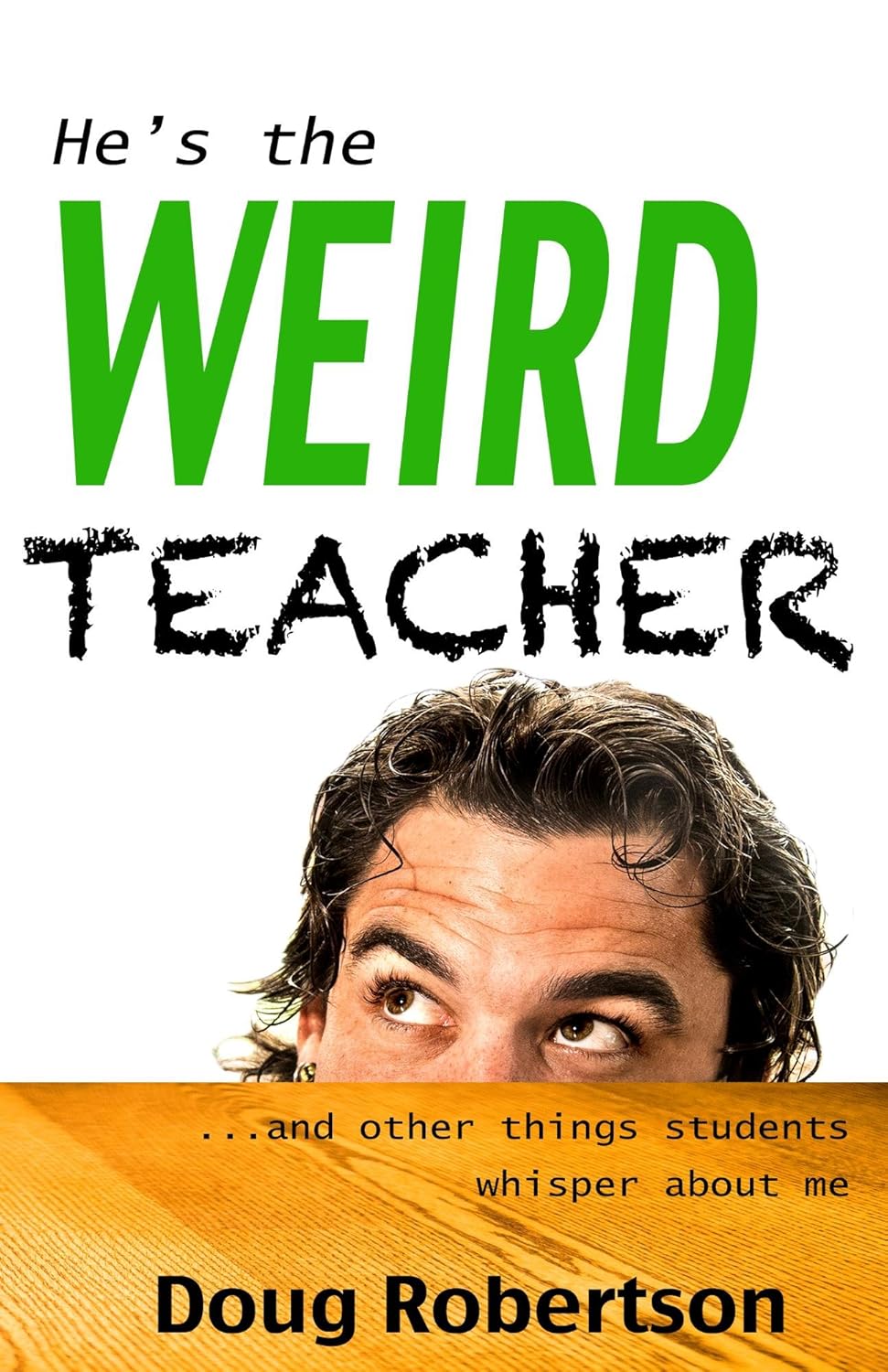
He's the Weird Teacher by Doug Robertson

I am always amazed by what a fun and friendly community of teachers I have found on Twitter. And one of my favorite Twitter events is Wednesday night's #WeirdEd chat. We've discussed how being weird in the classroom builds relationships, how education relates to Pixar movies, and had a very serious exploration of violence and safety in schools.  Doug Robertson is the ringleader of this wonderful chat, so I want to read his book. Plus, I've overheard students say the title of this book when talking about me. If my kids want me to read it, so be it!

Mindsets in the Classroom by Mary Cay Ricci

This was my principal's teacher appreciation gift to the staff. I've heard quite a bit about Carol Dweck's book, Mindset, and the power of moving from a fixed mindset to a growth mindset. I generally have a growth mindset, but I don't know how to impart that to my students. Maybe I'll find a plan here.

In addition to my professional reading, I hope to read some kid lit as well.  Now that I'll be working with younger students, I'm looking for suggestions of quality books that would be appropriate for good third grade readers.  Still, I have a few books in mind to read that should be of interest to my fourth and fifth grade students:
Now that my list is in writing, I need to follow through! Please let me know if you have any other kid lit suggestions or insights into the professional books I'm reading. I'm sure I'll post some reflections and ideas for how I'll apply these new ideas to the upcoming school year after reading. And I'll keep you updated as I continue to experiment and refine...

Images from Amazon.com