Monday, January 19, 2015

#SlowChatEd For the love of reading...

Once again, I'll be hosting #SlowChatEd Hopefully you can join us for this week's chat. (January 20-24, 2015)

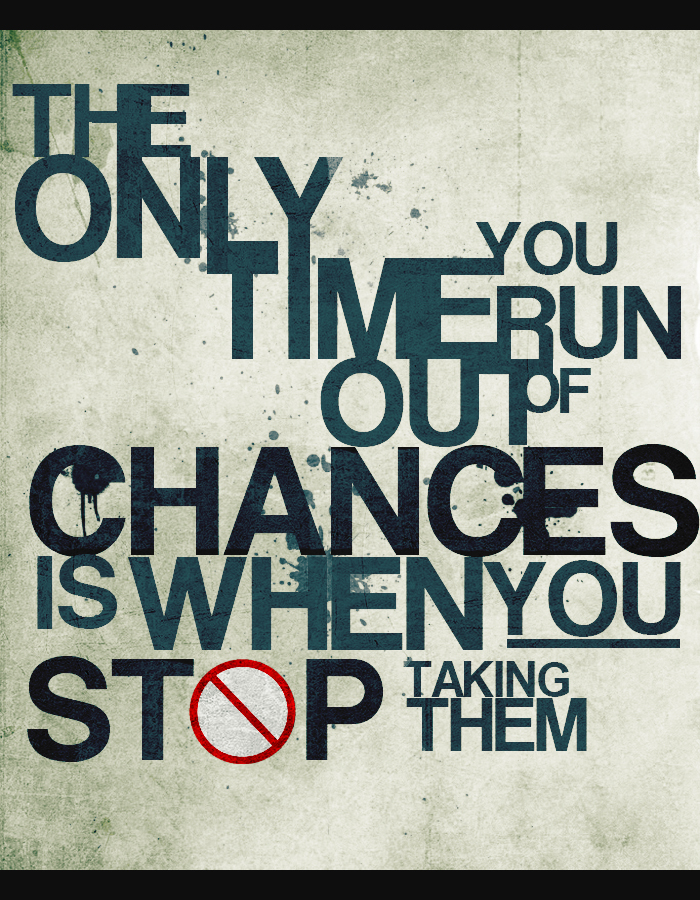
Image from Personal Excellence

Reading. It's the key to much of what we do as educators. Even the subjects that aren't about "learning to read" such as Math, Science, and Physical Education still require "reading to learn." And, of course, reading isn't just about books. Reading is the key to digital learning, too. Heck, you're reading right now so you will know what is happening when you read the #SlowChatEd tweets all week.

How do we become readers? How can we encourage our students to become readers? We'll spend the week sharing titles and links to books, articles, and blog posts. Hopefully, these examples will reveal some of our personal experiences as readers and the experiences we create for students to turn them on to reading.

Image from Wikimedia Commons

After last week's Fortunately...Unfortunately chat, I want to continue the great interaction and depth the #SlowChatEd community brought to those topics. So, I challenge you to ask each other questions, reveal your answers a little at a time, and have some fun while you're learning.

There is also a special assignment this week. During last week's chat, Lindsey Lipsky reminded us about the great READ posters of days past.


Sometime this week, make your own READ poster or find a favorite vintage one and share it with all your #SlowChatEd friends. If you post the best one, you'll be temporarily crowned emperor of the EduTweeters. It should be a terrific week, and I look forward to learning from all of you!

Your host for the week,

-Jim Windisch

Cross-posted to slowchated.wordpress.com

Saturday, January 10, 2015

What can 3D printing do for my classroom?

This fall, I learned one of our local libraries has begun to offer 3D printing. I immediately wanted to find ways for my students to take advantage of this local resource. In late November, I visited the library to see it in action. I was hoping to print a bowtie, but we just couldn't get the printer's software to process the file. I settled on a small picture frame instead.
I'm planning to use the video and frame as part of a 3-Act Task: figuring the amount of time or filament needed to make the frame. I'm also going to work up a design challenge for some of my math students challenging them to create a nameplate in Tinkercad. The library will print the nameplates from the student designs.

As amazing and engaging as I think the library's 3D printer is, I didn't feel like a 3D printer had a place at our school. The library's printer does great work, but appeared to need a lot of attention. The printing plate needs to warm up and cool down between each print. Printed objects need to be scraped off the plexiglass with a razor. It seemed like each 3D print would take more preparation and supervision than we have time for at school.

The CubePro C is my dream machine!
Image from 3D Systems
After bringing up 3D printing on my Facebook wall, Clay Hanson, a friend in engineering shared a video with me, and gave me this list of requirements for a great 3D printer:
  1. Print volume that can print a basketball. (Most things you will print won't be bigger than that anyway)
  2. Heated build chamber. ABS shrinks as it cools. A heated chamber lessens this.
  3. ability to print multiple materials: PLA, ABS, PVA, Nylon, rubber material, metal filled PLA
  4. multi head for support material and multi colors.
  5. 50 microns or smaller resolution.
  6. Good software. Don't have a recommendation
  7. non proprietary filament. Proprietary filament is expensive and pointless. It's all the same.
It looks like there are some 3D printers that could provide an incredible experience for students. What could my students do with it in math and reading classes? How do I get one for my school? For now, I'll partner with the library for printing, but who knows what the future might hold? If you have ideas or experience with 3D printers that might help me, please tell me about it in the comments. And I'll keep you updated as I continue to experiment and refine...

Sunday, December 14, 2014

Book review botheration

My students are writing a book review blog. I've been excited about this project since reading The Book Whisperer at the beginning of summer. It goes live next week, but I have a problem.

We worked together as a class to identify what a good book review looks like. We looked at professional reviews from The Horn Book and The Children's Book Review, and student-written book reviews at Reader Views Kids. But we were most impressed by the reviews from This Kid Reviews Books. Inspired by his format, my kids decided to write book reviews in two sections: a summary followed by their opinion.

Altered books by Bryan Elementary students
As the teacher, I led discussions about what made for a good book review. We read about writing book reviews and revising with a partner from the Writer's Express handbook. I wrote an example review using the format we chose as a class. I've offered suggestions on their Google Docs. Still, about a third of my students haven't written a quality book review yet. 

Some of my kids' reviews lack detail. When I push for more, they say that more detail would result in giving spoilers. Other reviews lack specifics in the opinion section and just say "it was a good book," without giving examples of the things that made it shine.

Other students have written beautiful reviews that tell just enough about the book to entice a reader. The opinions include reasons why the characters or settings were just right and comparisons to other books. Those reviews are ready to publish and represent the type of work I expect from students in an advanced learning program.

I'm struggling with where to go from here. I know that we'll post the detailed reviews this week, but not the others. This year, I've been working at building a culture of going back to review and revise work until it is top quality. I'm not allowing students to get a low grade and move on. How do I continue to support those students to develop their writing? Where do I find the balance between pushing them to improve and motivating them to write?

Please let me know if you have some ideas. I want my 4th and 5th graders' writing to shine. I know we can get there with some more time and effort. And I'll keep you updated as I continue to experiment and refine...

Saturday, December 6, 2014

Making ideas real: #slowchatED December 8-12

Since joining Twitter, #SlowChatEd has been one of my favorite hashtags. Since it runs for an entire week, it was always a little different than the other, sometimes frantic Twitter edchats I join in on. But when the school year started, #SlowChatEd disappeared. I figured it went on a short hiatus while the usual moderators were "September busy." The hiatus dragged on, and #SlowChatEd slipped to the back of my mind.

Then, a couple weeks ago, Ross LeBrun revived #SlowChatEd to talk about being thankful. Although I couldn't participate for the entire week, I was reminded how much I liked the slow chat format. So, this coming week I plan to hijack (I mean moderate) #SlowChatEd to talk about "making ideas real."

As I've shared before, joining Twitter has done wonders for me as a teacher. Before Twitter, I was still an avid reader of big education websites like Edutopia and a few teacher blogs. I attended conferences and professional development classes whenever I got the chance and I was always looking for new ideas in my classroom. When I hear a great idea, I want to put it into action right away! Sometimes, though, I had so many great new ideas that I just couldn't make them work. Being on Twitter has only made it worse - my TweetDeck columns are never-ending waterfalls of new ideas. How can I make the best of these ideas into reality?

Image by nocturnal~schism
I'll be posting one question or prompt each day for the next week. Since it is a slow chat, please feel free to respond in multiple tweets, post links to resources, and ask questions of the other participants. Here are the questions:

Monday: Share an idea you recently implemented in your school.

Tuesday: What are your favorite sources for new ideas?

Wednesday: How do you manage the flow of ideas?

Thursday: Share an idea you are working on now. How are you moving from idea to reality?

Friday: How can we support each other and our colleagues to implement new ideas?

I have a few follow-up questions in mind for some of the days, too. I hope this will be a valuable discussion and I hope to see you there!

Sunday, November 23, 2014

BIG things in math - Part 3

Read part one and part two to see how my fifth grade students began using Jorge Rodriguez-Gerada's "Out of Many, One" in math class.


After figuring out the square footage and weight of the materials used for "Out of Many, One," I wanted to give my students the opportunity to create something large. My original plan was to go outside and measure our school's field, make a scale drawing of the field, figure out an image that would fit the shape, and then use string to mark a portion of the artwork in a little-used corner of the field. A week of very rainy days made that plan impossible, so we figured out a suitable indoor alternative.

My fifth grade math students separated into two teams to design large posters for one of our school's hallways. I showed my kids the wall spaces available for posters before giving them a selection of different size graph paper and the requirement to include a quote or slogan that represented a growth mindset, but otherwise I left them alone to come up with something. 

Our spaces had obstacles including a fire extinguisher
The first day of work on the project consisted mostly of measuring the space for the poster. Both groups recorded a number of measurements, but had a difficult time translating those to a scale drawing. Seeing that my students needed some more experience with scale drawings, we spent part of the next class period looking at diagrams, blueprints, and other scale drawings and discussing how large objects were represented accurately in smaller drawings. We also looked at our second activity with "Out of Many, One" in an attempt to see how we previously worked with scale.

It didn't take long from there for students to complete their scale drawings. When they presented them to me for approval, I asked how much butcher paper they needed and how large the writing and other features would be on the poster to double-check their scale drawings.

Next, students divided up the work on their posters. It was interesting to see how one group put assigned members certain squares from the graph paper while the other group chose one person to work on text and others to complete specific drawings on their poster.
This group used 1/2 inch graph paper

Both groups ran into trouble with teamwork along the way. I did my best to let them solve their issues, but I had to step in a couple times to help. One group had a very difficult time drawing objects on the big poster to the correct scale based on their scale drawing. I frequently checked in and had them look back at the scale drawing to confirm that their poster matched the plan.
Turning the scale drawings into large murals
took a lot of careful measuring

In the end, my students created some nice art for a bare spot in the hallway, got some practice measuring & multiplying, and learned a bit about scale drawings. It definitely took longer than I planned. We spent three full math periods working on the project and used the last ten to fifteen minutes of class frequently for about two weeks. Still, the students really enjoyed the project and it gave them a chance to demonstrate their budding understanding of scale. If I do this with next year's fifth graders, I would want to give them some more opportunities to work with scale drawings before getting to this project and I would want to speed up the process of creating the final posters. Still, it was a fun project and it makes me excited to find more extended problem solving opportunities for all of my math groups. And I'll keep you updated as I continue to experiment and refine...  

Sunday, November 9, 2014

Seeking enrichment for all

Teaching in an advanced learning program, the idea of enrichment drives so much of what I do. I'm always trying to go beyond our curriculum to provide my students deeper understanding. It's terrific! I love seeing what my students can do and sharing all of those enrichment opportunities with them.

But my students make up about 20% of my school's population in grades 3-5. What about the other 80%? What about the younger kids? If my job is to provide enrichment, how can I provide enrichment to all?

My first attempt to provide enrichment to all is our Invent Idaho competition. I participated three times when I was in elementary school: adapting a phone cord as a dog leash, creating a cat food container that was also a serving dish, and making a mash-up of Tiddly Winks and the Game of Life. The competition challenges students to create something. They keep an inventor's journal with their thoughts and sketches, build a prototype, and make a display board to share their invention with the world (or at least everyone at their school).

Last week some of my reading switch groups were canceled due to testing, so I took the opportunity to visit other classrooms and get the whole school (not just the kids officially in my program) fired up about inventing. It was awesome! Since visiting the first and second graders, I think I've had at least half a dozen of the little guys come up to me each day and tell me an invention idea. A fifth grader I never met before visiting his class has come to see me twice during recess to show me blueprints and dig through my tinker box for materials. I think we're in for some awesome inventions at our competition this year!

I shared this video with all the classes I visited

I'll put some posters up around the school, make a few guest appearances on our morning announcements, and keep encouraging the inventors I meet in the hallway. Hopefully that will result in a wide reach for this enrichment opportunity.

We're still about a month away from our school competition, but I'm already asking myself how I can provide more enrichment for all opportunities. The next one on the calendar are the classroom and school spelling bees I coordinate in January. Like any teacher, my time is limited, but I know there have to be more ways that I can help provide some great opportunities for all the kids at my school. Do you have an enrichment for all opportunity that works in your school? Please let me know in the comments. And I'll keep you updated as I continue to experiment and refine...

Monday, October 27, 2014

BIG things in math - part 2

Read part one to see how my fifth grade students began using Jorge Rodriguez-Gerada's "Out of Many, One" in math class.

This satellite image was captured by DigitalGlobe's GeoEye-1 satellite
on Oct. 6, 2014. Image from the National Portrait Gallery's website.
After figuring out how much dirt was used in the creation of "Out of Many, One," my kids tried to figure out just how big this colossal artwork is. We looked at a number of photos of the work, but decided that the one to the right gave us the easiest picture to measure. It didn't take long for students to realize that they needed more information to figure out the scale.

I pulled up a map of the National Mall on Google Maps to give us some context of the area. After a little discussion, we decided that we should figure out the length of another feature in the picture. We chose the road to the west of the DC War Memorial. Although the road had a small curve around the memorial, it was the easiest to clearly identify in the picture and on the map. The road measured 400 feet long. Students used that measurement to come up with a scale for the map and estimate the square footage of "Out of Many, One." If I were to do this project again, I would find measurements for other landmarks, such as the width of the reflecting pool, to see if we come up with similar estimates when basing our scale on other known distances.
Image from Google Maps
We weren't done exploring big things just yet. My students went from using scale to estimate the size of this artwork to creating their own scale drawings for a giant artwork. They're still working hard on that project, and I promise to let you know how it goes.

You can see my students' final project in part three.