Showing posts with label classroom climate. Show all posts

Wednesday, August 16, 2017

Hate is poison. Education is the antidote.

It's easy to say that white supremacists of all types are wrong and I do not support their ideology one bit, but it's hard to figure out what I can do about it. When I couldn't sleep last night, I looked to my past experiences and my community's history for answers.

I have lived in or around Coeur d'Alene, Idaho for my entire life. For most of that time, a white supremacist compound in nearby Hayden Lake cast a shadow over our town. I became aware of the aryan nations group when a bomb exploded less than 500 feet from my first grade classroom. A nearby business owned by a Jewish family was targeted when some members of the group used explosions to distract from their plans to rob a bank.

As I grew older, I remember occasionally seeing a swastika patch on someone's jacket in the grocery store. My response was always to move to another aisle as quickly as possible. There were times that their hatred became more visible. One day, the neighborhoods around my high school were leafleted with racist propaganda and some of my friends brought the papers to school. Some were laughing at the inappropriate jokes inside, but most were shaking their heads with disbelief. I was concerned about my friends who found it funny and remember telling them that the neo-nazis wanted to turn their laughter into hate.

Looking back, it wasn't hard to be honest with my friends about hate. My parents did a good job giving me the confidence to stand up for what was right, but my education deserves credit, too. To counteract the hate in our community, educators made an effort to teach love and acceptance for all, especially those who were different. My fifth grade class was one of the first to attend the long-running human rights celebration that we still hold today. Books like Number the Stars were part of the curriculum, and reading them led to discussions of the toll that hate takes. 

The final hate group march in Coeur d'Alene, 2004
Photo by Cole via Flickr
Our community did its best to avoid adding fuel to the fire. When hate groups marched downtown, movie theaters, the roller skating rink, and other businesses across town offered free alternatives in the hopes that no one would be on the sidewalks to see the brownshirts and klansmen pass by. Most people understood that the white supremacists craved conflict. It was better to turn our backs to them until we were able to drive them from our community.

That day came when they shot at a former elementary school classmate of mine and his mother. I was in college about 100 miles to the south, but I followed the story of how the aryan nations were forced to turn over their property after losing in court. The story is worth reading. "Welcome to Hayden Lake, where white supremacists tried to build their homeland" by Meagan Day is a good overview, and the Spokesman-Review has a number of articles if you're interested in digging deeper.

Of course, closing the aryan nations compound didn't remove hate or all white supremacists from our community. During my first round of conferences as a teacher, I found myself shaking hands with a man wearing a black jacket with the aryan nations symbol on one sleeve and two jagged images of the letter 'S' on the other. Sometimes I catch a student using hateful language or humor, and I find myself pulling him or her aside to talk about it. No matter what happens outside of school, hate is not welcome in my classroom.

I've come to the conclusion that the best way I can combat hate is with the way I teach. First, my classroom is a safe space for all. We work on how to listen to one another and solve problems together. Second, we get to know our fellow humans. As I build my classroom library, I strive to include books with characters that each of my students will identify with. I also intentionally pick books that will allow my kids to get in the heads of people who are very different from themselves. Good, diverse literature helps kids understand others without seeing them as "the other." We also reach out to the world through the Global Read Aloud, mystery location calls, and connections with our class blog. These actions have gone a long way toward inoculating my students from hate by increasing their empathy and understanding of others.

In addition, I plan to address hate when we encounter it in literature and current events. We need to have frank discussions about the hate that exists and how we can keep ourselves and our friends from allowing it to spread. My students need the courage to stand up to their friends when they notice hateful words or actions. I can't stop the white supremacists that take to the street, but I can make sure my students know better than to stand for it.

___
Note: excuse my lack of capitalization, but hate groups don't deserve to be proper nouns.

Friday, April 7, 2017

Compliance: #IMMOOC inspired post

Image courtesy immooc.org
Compliance: I often think of it as a bad word in education. Just like the quote above, I believe that it often leads to conformity and squashes student voice.

Compliance has been heavy on my mind for the last few months. Where is the line between a high-quality learning environment and compliance for compliance sake? I want my students to be comfortable. I want them to have the freedom to be themselves in my class. I want them to move when they need to. Lately it seems like those wants are clashing with the learning needs in my classroom.

Let me start by explaining a little bit about my classes. I teach reading and math enrichment groups in a traditional elementary school. My classes are similar to 45 minute middle or high school class periods, although there isn't a passing period. Students often trickle in for the first five minutes as they make their way from their main classrooms. We start class at assigned tables (it helps me take mental attendance and gives students a built-in discussion group) and begin with mental math or an estimation that requires students to share their thinking. It doesn't matter to me if students sit or stand (or even wiggle and dance) at their tables as long as they participate in their discussions and respect everyone's space. This year I have a few students who aren't staying at their table or withdrawing from table talk when a best friend is at a different table. I want students to work with everyone, not just their friends and homeroom classmates. I'm left questioning if these procedures that support my goals are worth the frequent power struggles.

Image courtesy of immooc.org
I have to admit that the old saw "give them an inch and they'll take a mile" has crossed my mind a few times this year. However, reading The Innovator's Mindset strengthened my resolve to give my students the inches, feet, and miles they need to be independent learners and innovators I know they can be. In these last couple months of school, I plan to increase my efforts to build relationships with these students and give them opportunities to use their strengths. Hopefully we will get to a point where these students trust me enough that they will buy in to balancing their personal freedom with their responsibilities to the whole classroom community.

Although I am going forward with my plan, I still question rather it is the right path. Next year is a new opportunity to structure a classroom where my students can become innovators. All of the professional development I have done this year, including my school's book study on That Workshop Book, a visit to a classroom with a successful reading workshop, my own reading of Mathematical Mindsets and The Writing on the Classroom Wall, numerous Twitter conversations, and #IMMOOC are bouncing around in my head. It's time to make some changes, and "change is an opportunity to do something amazing"!


Saturday, March 18, 2017

Working toward empowerment: #IMMOOC Week 3, Post 3

I pride myself on having engaging classes. My room is a place for exciting projects, highly anticipated annual events, and connecting with other places via Twitter and blogging. Engagement hasn’t been my goal, though. I want my students to clamor for knowledge and understand how to drive their own education in my class and beyond. Chapter 6 of The Innovator’s Mindset has me wondering if I empower my students to reach that goal.

Right now, my 5th grade reading students are in the middle of creating curiosity projects. This is the fourth year I have attempted something inspired by Genius Hour. Some kids blow me away with their enthusiasm and deep learning as they take school time to write a short story or do research on one of their passions. Other kids seem to amass a folder full of gifs and memes related to their chosen topic, but show little evidence of new learning.

This taste of empowerment isn’t enough. My kids need more chances to take control of their learning so they can all use that freedom to do amazing things. I’m not quite sure what it will look like, but I can’t wait to get there!

Tuesday, November 17, 2015

That time I taught kindergarten

One thing I love about my job is I never know exactly what to expect. I teach six very different groups of third through fifth graders each day and they always surprise me with their ideas. I never would have guessed the biggest surprise of my career would be a phone call from the office last Tuesday.

"Jim, would you be willing to sub in kindergarten today? I know some of your reading switch classes are canceled due to today's benchmark assessments, and we can't find anyone to take Mrs. C's class."

I've always liked kindergarteners...from a distance. Throughout my teacher training and time substitute teaching I taught all subjects and worked with tons of high school, middle school, and elementary students, but never kindergarteners. I honestly have a terrible fear of stepping on them. I'm 6'3" and the average kindergartener is somewhere around three and a half feet, so it's within the realm of possibility that I could accidentally crush one under my size 12 Doc Martens.

But I'm part of a team. And it was my child's class. I didn't want those kids to be without a teacher for the day, so I said yes. I'm glad I did.

Kindergarten is a pretty amazing place, and I learned a lot in my day teaching there. These are some of my big take-aways:

I read Mig the Pig's Big Book at carpet time
It's all about community. Every activity in that kindergarten class started with carpet time. Students sat close together and listened to me explain what we were going to do. They were in a safe place to ask questions and clarify their understanding before they tried something new in the classroom. When they had free choice at the end of the day, the kindergartners naturally worked together on activities like puzzles and games.

School should be joyful. I equate music with joy, and kindergarten is a musical place. I didn't get to sing the color songs or the Handwriting Without Tears songs in my day as a kindergarten teacher, but we did get to do "Head and Shoulders, Knees and Toes" and I even made up my own "Let's All Come To The Carpet" song to the tune of the old movie intermission song.

Routines give the day a rhythm. This is the first year our school has had all-day kindergarten. It's a long day for those guys. I know my little guy frequently falls asleep on our way home from school. Mrs. C has built a great schedule for her students. They do their reading and math in the morning with breaks for a snack, recess, and wiggle time. After lunch they have some quiet time before afternoon recess and specials. Then they have free choice time before gathering together to wrap up the day. Everything got done without feeling rushed.

Fun at free-choice time
Learning through play is best. When it's time for independent work in kindergarten, a lot of it is done through play. Students cut out rhyming words and scooted them around trying to match them to pictures. During free-choice time at the end of the day, kids picked all sorts of games, puzzles, and other activities to work on and they learned while doing it. I frequently hear upper grade teachers say there's no time for play with all of the pressures of testing and standards. Heck, I know I've said it. Kindergarten teachers are under a lot of pressure, too. They're expected to get kids reading and ready for the demands of first grade, but they still recognize that play is often the best way to learn something.

Kindergarten teachers are magical beings. I had a great time teaching kindergarten for one day, but I was exhausted at the end of it. I was so impressed by the culture of Mrs. C's class and the way the kids, classroom assistants, and volunteers got things done in there. I've always had a lot of respect for kindergarten teachers, but after walking in one's moccasins for a day, I am absolutely amazed by what it takes to be a good kindergarten teacher. I am overjoyed that my son is in such a great class.

I haven't started using pocket charts with the big kids.
I've taken those lessons back to my classes. This week, my students have done more learning through play. In fact, I used games to collect data for some math assessments. I've been using more music in my classroom. I haven't called my kids to the carpet with a song, but we've been listening to appropriate background music - "Switched on Mozart" with a robot challenge and college fight songs with sports problem-solving. I'm still working to improve the community and rhythm in my classes, but I need to keep experimenting to make that work for my 45 minute classes.

Teaching kindergarten for a day was completely worthwhile. I knew a lot of my kid's classmates before, but now every kid in that class greets me in the hallway or out at recess. I feel deeply connected to a part of the school that seemed quite distant in the past. The best part, though, was my kid's comment at the end of the day: "I'm sad Mrs. C was sick, but I'm kind of happy about it because you got to be my teacher."


Sunday, May 3, 2015

The swinging new sounds of professional development

Since becoming my official Building Technology Leader, I've been working to provide meaningful professional development to my colleagues. I often share a new tool or idea with my staff at our collaboration sessions or staff meetings. I have made it a priority to give teachers time to discuss, experiment, and play with new technology in my sessions, but everyone seems a little reserved and hesitant and I can tell that many are much more concerned with the impending morning bell and preparing for the day to come. I knew I could make professional development more engaging and memorable. Press 'play' below, read on, and see what I mean.


Welcome to Monday Morning Appy Hour!

Care for a drink? It's okay, these mimosas are made with 7-Up, not champagne. Fire up that iPad and learn about a few new apps.

Stemware & iPads: what a combination!
The content of Monday Morning Appy Hour wasn't radically different from my other PD sessions. I shared SeeSaw, ChatterPix, Shadow Puppet EDU, and Telestory, discussed the importance of moving students from consumers to creators, and gave everyone some time to try the apps and generate ideas on how they could be used in the classroom. The attitude and level of participation, though, was a huge improvement from my past morning trainings. Everyone was having fun, and they were really discussing how they could use these tools in their classrooms.

So, is providing refreshments the key to engaging PD? I don't think so. I transformed my classroom and broke everyone there out of the expected environment. I've done it before for my students by disguising myself as a signer of the Constitution and being my own substitute teacher for the day or starting class with kindergarten-style circle time for fifth graders, but I'd never transformed a presentation intended for other teachers.

PD featuring the smooth instructional stylings of
Jim Windisch
In Teach Like a Pirate, author Dave Burgess devotes an entire chapter to transformation. In the chapter, he asks a powerful question: "If your students didn't have to be there, would you be teaching in an empty room?" Teachers are busy; they have a lot to do to be ready for the day each morning. As much as they want to learn new technology, I know my PD sessions wouldn't be everyone's first choice for that precious before-school time. This session was optional, but most of my school's staff was there. In fact, after the first couple teachers came in, received their drink and heard the lounge music, they went and grabbed others because "Mrs. X just needs to see this!" It went from a training to an event.

Making it fun loosened everyone up. They were excited to participate. The room was full of terrific conversations about giving students opportunities to create. I jumped in to support and tell some lousy jokes, but I refrained from actually doing any lounge singing. 

It was also a memorable experience. I feel like breaking away from the ordinary got the morning's content stuck in the participants' heads. Instead of having teachers ask me to remind them the names of the apps, they're coming to me to share how they've incorporated them into lessons and looking for support to take it a step further.

I'm sure this is only my first foray into transforming professional development. I'm already thinking of themes for future sessions. And I'll keep you updated at I continue to experiment and refine. 

Thank you, thank you, and especially, thank you. Remember to tip generously. I'll be here all week!

Monday, March 9, 2015

Authentic audiences #slowchated March 9 - 15, 2015

Image from Wikimedia Commons
I took great pride in my work for elective classes in high school: often more than I did for my academically required courses. I played tuba in multiple bands, acted in most of our school plays, competed in speech and debate, and wrote for the school newspaper. Now, of course, the fact that I chose my electives was a motivator, but the biggest difference between those classes and my others was the audience. I knew that my work would be on display for my peers and the larger community, not just the teacher. I practiced and practiced the tuba solo in the Holst Suite because I knew how many people would be listening. I carefully revised and edited every submission I wrote for the Timberwolf Times because all of my friends and teachers would read my work. I did fine on the papers that I wrote for my teachers' eyes only, but I rarely put the same type of effort into those assignments.

Coursework in the arts and many electives has always given students an authentic audience, while work in other classes is done solely for the instructor. Why? Personally, it wasn't something I thought about much until recently. In the past, I had my students imagine an audience for their writing, but we rarely wrote for a real audience. This year, I'm starting to give my students real audiences for presenting their work. I've seen how sharing their work with a broader audience motivates and inspires many of my students. Still, I know I can do more and I want to hear your ideas.

These are the questions I have in mind, but they are subject to change as you contribute ideas throughout the week.   

Q1 What makes an audience "authentic"?
Q2 How do your students create for authentic audiences?
Q3 How much audience participation do you want? How do you encourage or discourage it?
Q4 What is something you already do that could be enhanced with an authentic audience?
Q5 Where do you find an audience?
Q6 What is your "dream audience" for student work?

I'm eager to discuss this with you on #slowchated and I hope that you will take full advantage of the slow chat format. We have a whole week to find and post links, photos, and blog posts. Best of all, we have an authentic audience in each other, and audience participation is required. Ask questions, challenge assumptions, and learn from one another!

Sunday, September 28, 2014

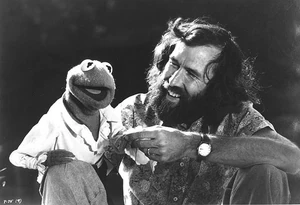
Inspiration from Jim Henson

Picture from The Muppet Wiki
"When I was young, my ambition was to be one of the people who made a difference in the world. My hope is to leave the world a little better for having been there."    -Jim Henson 

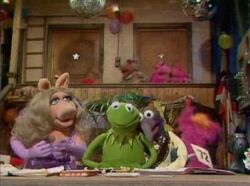
Picture from The Muppet Wiki
Remember the chaos of the Muppet Theater from The Muppet Show? Dr. Bunsen Honeydew's inventions running amok, the Swedish Chef being attacked by his ingredients, Miss Piggy making demands for her closing number, The Great Gonzo's act onstage literally bringing down the house, and Kermit the Frog was backstage keeping everything running as smoothly as possible. That's the type of classroom I want to have. Jim Henson talked about the "gentle anarchy" of his work. I think that's just the thing our classrooms need.

Jim Henson would have turned 78 years old last Wednesday. I've loved his work for as long as I can remember. Some of my earliest memories are of laughing with my grandpa as we watched The Muppet Show. I played my Muppet Show Cast Album records so much growing up that I nearly wore out the grooves. When I had to pick a name for my high school German class, I chose Kermit. The area behind my desk is a gallery of Muppet photos and a picture of Statler and Waldorf hangs on the wall where I can imagine them heckling anytime I stand at the front of my classroom and lecture too much.

What does Jim Henson's work mean for me as a teacher?

First, his work had an enormous influence on my sense of humor. There's a good chance that Sesame Street was the first thing I watched on TV. Even today, the episodes from the early 1980s are very funny. The gentle anarchy of a neighborhood inhabited by children, adults, a giant bird, and friendly monsters is a prime environment for comedy. It wasn't long before I discovered The Muppet Show and really began to understand what made me laugh. The way Fozzie Bear tries too hard to make others laugh, Sam the Eagle's complete, stone-faced seriousness, and Gonzo's nonsensical stunts created my comedic vocabulary.

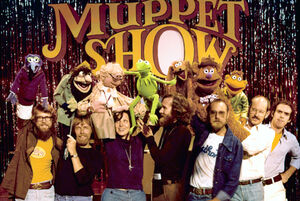
Picture from The Muppet Wiki
The Muppets taught me teamwork. All the residents of Sesame Street help each other out. And even though every production in the Muppet Theater nearly results in disaster, they all pull together for a show-stopping closing number. But that teamwork pales in comparison to what was going on under the Muppets. Jim Henson assembled an amazingly collaborative team. Everybody played to their strengths whenever possible, but took risks to create new, exciting things together. I aspire to that level of collaboration with my students and my colleagues.

Nothing teaches the value of individualism and diversity like the Muppets. Every pig, chicken, and monster has something wonderful to contribute. The same is true of every child in my classroom. I want my students to explore their own passions, to tackle problems from their unique perspectives, and share who they are with the class. Giving students choice often results in a classroom full of gentle anarchy, and that's the way I like it.

Image from The Oatmeal
Finally, loving Jim Henson and his work helps keep me in touch with my inner child. How can I teach a seven-year-old if I can't laugh at the same things that make her laugh? To be an effective teacher, I need to remember what it's like to lose myself in wonder - to believe that animals can talk and a frog and a pig can fall in love. Being able to connect with my students in that way helps me build rapport.

As I sit here early on Sunday morning in pajama pants decorated with wide Muppet smiles and wearing a Kermit the Frog T-shirt next to Muppet representations of my family sitting on the mantle, I know Jim Henson had an outsize influence on who I've grown up to be. I'm thankful for what his work has done for me and I aspire to pass on some of that gentle anarchy as I laugh and learn with my students.


Tuesday, August 26, 2014

Mindfulness and morning ritual


We live in a multi-tasking world. From the moment I wake up, I'm making plans for the day ahead, reflecting on what I did the day before, and thinking big thoughts while I shower, eat breakfast, and get ready for the day. It seems no matter what my body is doing, my brain is thinking about something else.

There is one exception to that: my morning shave. A couple years ago I switched from my canned shaving cream and four-blade cartridge razor to something my grandpa might have used. I lather my face with a brush and bowl of soap. Then I scrape the scruff from my face with a double-edged safety razor. The threat of cutting myself makes it necessary to clear my mind of all other thoughts. I concentrate on gently guiding the razor until I've cleared all the lather from my face.

My morning shave is one of the best parts of my morning routine. Those minutes of concentration on a single task are wonderful, and I get a better shave than I ever did with my "high-tech" razor. Progress isn't always progress.

So, what does this have to do with my classroom? My morning shave grounds me and prepares me for the day. I don't always bring my regular shaving kit when I travel, and I miss it. In fact, my trip to Edcamp Idaho was one of the rare occasions when I brought everything along. I found that I was more alert, made better decisions, and was more present throughout the day than I am when I take a travel razor and can of shaving cream.

My students need something that calms their minds and grounds them, too. A couple years ago, I received a book about the Hawn Foundation's Mind Up program. It's centered around a core practice of having students sit quietly and focus on their breathing to begin class. I bought a chime so I could signal the beginning and end of our focusing time. When I tried it with my students, I started to see results immediately. After a few days practice, having those moments of quiet made such a difference for my kids. They were able to leave stress encountered on their way to school or during their before-school recess time behind so they could focus on what we were doing in class.

Students began to ask for the chime before tests or student presentations. If I forgot to ring the chime after recess, someone would always raise a hand to offer a reminder. It became an essential routine for my classroom.

In addition to the core practice, I led my students in exercises to improve focus. One time, we listened to all of the sounds in a quiet classroom. Another time I filled cups with different scented objects for students to experience. My favorite was taking time to carefully observe an orange slice candy: considering its appearance, sensing the texture of rough sugar crystals in the hand and on the tongue, and finally biting down and savoring the sweetness. With each activity, I saw students slow down and really pay attention to the world around them. Although I could see a benefit, I wasn't able to give students that type of extended exercise often enough. Still we did our core practice at least twice a day.

When our days of standardized testing started after spring break, the chime came with us to the computer lab for each testing session. I still gave a pep talk and reminded students to put in the effort that would result in each individual's best performance, but our core practice became a shortcut to mental preparation. As soon as I rang the chime, I saw many of my students physically change from tense to relaxed. Even the students who had great anxiety about testing would at least take the time to close their eyes and breathe deeply before looking at the screen. Our core practice served the same purpose my morning shave does: it allowed us to stop and focus on a single thing before facing an endless number of sensory inputs.

When do you focus on a single task? Does it prepare you to face the world? As I move to a new teaching position with six different groups of students each day, the mindfulness routine in my classroom will need to change. Still, I know it is important and I want to make sure it happens. And I'll keep you updated as I continue to experiment and refine...


If you're interested in trying out old-fashioned shaving for your morning routine, here is a slideshow of my recommendations. (These products are offered through the Amazon Associates program, so I am compensated if anyone purchases. I would recommend these tools regardless, they're what I choose to use)
In addition, I use Montana Natural Shave Company's pre-shave oil (from Missoula's Good Food Store).
My back-up razor is a Depression-era Gillette razor found at a junk store. There are many good antique razors available if you're interested in getting started that way.
No matter how you go about getting started, it's worth watching a lot of footage and instructional videos before your first attempt.